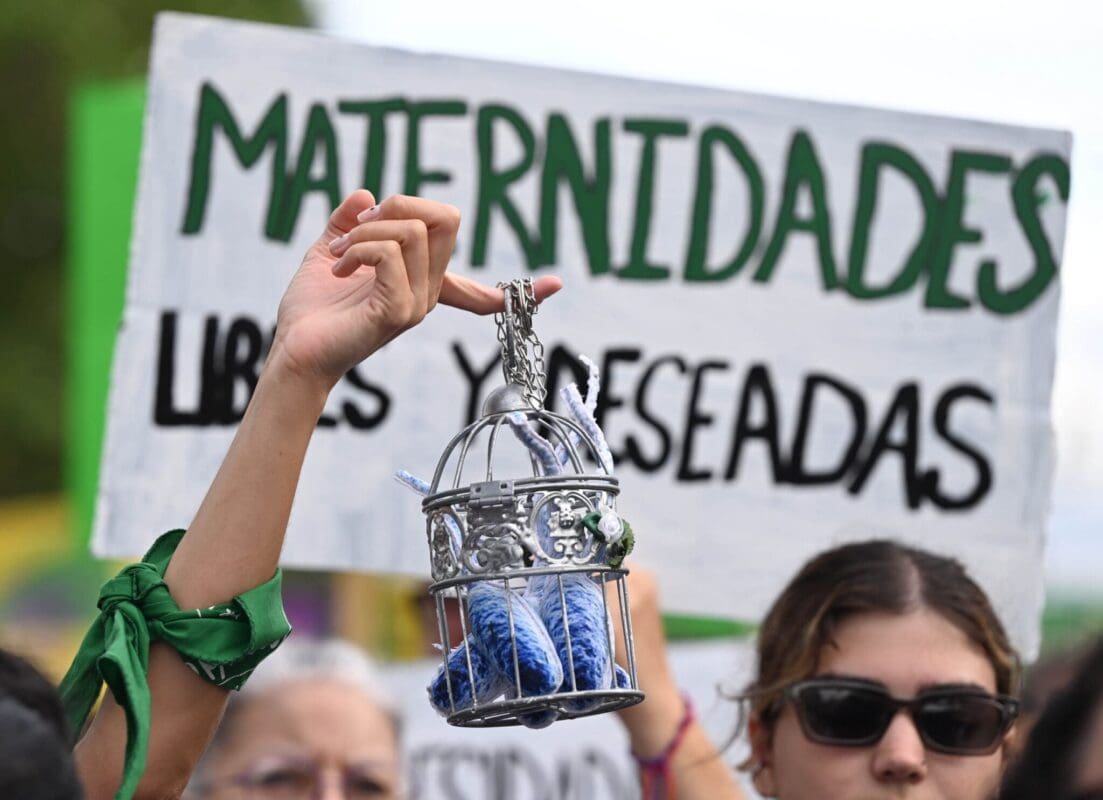

Marinelis Acevedo Cordero was worried something might be wrong with her pregnancy, but she could not find an obstetrician-gynecologist in western Puerto Rico willing to see her. “I had called several gynecologists in the area, and none of them accepted my (health) plan,” said the frustrated 27-year-old Moca resident.
It was December 2024, and only one obstetrician in Mayagüez told her he could see her, but each appointment would cost $100, and she would also be charged for the delivery. That did not seem feasible to her.
Acevedo Cordero made an appointment with her endocrinologist, who found her a doctor who saw patients in Mayagüez and Sabana Grande. That gynecologist also did not accept MCS Life, her health insurance plan.
“When I called the plan to find out whether there was any gynecologist in the western region who accepted it, they told me the closest one was in the South.” Under those circumstances, Acevedo Cordero decided to apply for Plan Vital, the Puerto Rico government health plan, which took only “a few weeks” to be approved. She was then able to see the gynecologist her endocrinologist had recommended.
It took her nearly an hour to get to her appointments in Sabana Grande. “Sometimes, we spent the whole day there,” she recalled. When she had to go to the Mayagüez office, the trip took between 40 minutes to an hour.
Acevedo Cordero’s experience is not isolated. Giving birth in Puerto Rico has become a challenge marked by a lack of nearby obstetrician-gynecologists and the closure of labor and delivery units. In most towns in the island’s central region, that reality is even more pronounced.
In 2017, Puerto Rico had 36 labor and delivery units. In nine years, 13 closed and two opened, representing a 30% reduction in services.
The main reasons for the closure of labor and delivery units in Puerto Rico include the decline in the number of obstetricians, partly because health plans do not pay them enough; costly lawsuits in obstetrics; and a drop in births, according to Health Secretary Víctor Ramos Otero and Puerto Rico College of Physicians and Surgeons President Carlos Díaz Vélez.
Twenty percent of Puerto Rico’s municipalities are classified as “maternity care deserts,” according to a report by March of Dimes, a U.S. organization dedicated to the health of mothers and babies.
Maternity care deserts are areas that lack hospitals or birth centers with obstetric care, as well as specialized providers. Medical literature has linked them to worse maternal health outcomes, including more complications during childbirth and longer travel times to access services.
The Health Department keeps a registry of 468 physicians specializing in obstetrics and gynecology who have active licenses to practice in Puerto Rico. Of those, 408 appear to be working in Puerto Rico. However, the agency does not have details on how many provide care to pregnant women during delivery.
The Gender Investigative Unit looked up contact numbers for each doctor and called them as any pregnant person seeking an obstetrician-gynecologist would. It reached the offices of 220 doctors. Many calls were made to numbers that appeared to be disconnected, had automated systems that made it impossible to reach a person, or simply rang without an answer. Among those who responded, only 63 were identified as doctors who treat pregnancies through delivery. Another nine see pregnant women, but only as part of subspecialty care or for initial consultations.
Of the 63 obstetricians, 56 are accepting new patients. Of those 56, about 47 accept Plan Vital, the Puerto Rico government health plan.
Of all those who responded, 145, or 66%, confirmed that they do not treat pregnant women. “Not anymore,” was one of the most repeated answers.
The 63 doctors who treat pregnancies through delivery work in 24 municipalities, meaning seven out of 10 municipalities do not have a single gynecological services office that the Gender Investigative Unit could contact after several calls on different days. Puerto Rico has 78 municipalities.
The western, central and eastern regions, including the island municipalities, Vieques and Culebra, are the most lacking in services.
Some of the doctors who do treat pregnant women through childbirth do so in two or even three municipalities. San Juan and Caguas are the towns with the largest number.
Between 2021 and 2022, Health Department data showed a 21.4% increase in hypertension during pregnancy, as well as an increase in heart, thyroid and anxiety problems. By 2023, low birth weight and fetal mortality had also increased. Postpartum depression, meanwhile, rose from 10.8% to 17.7% in just four years.
Doula and midwife Paloma del Mar Hernández Quiñones noted that most pregnant women in Puerto Rico begin receiving care in their first trimester, but the data show that 8% and 11% develop gestational diabetes and hypertension, respectively. Hernández Quiñones emphasized that this happens even though many are young and have no preexisting conditions.
Complications during pregnancy in Puerto Rico are a source of “concern,” even though 85% of pregnant women begin prenatal care in the first trimester, according to a 2024 funding request the Health Department submitted to the federal Title V Maternal and Child Health Services Block Grant program. The most prevalent complications during pregnancy on the island are anemia, anxiety, high blood pressure, depression and gestational diabetes.

Photo by Ana María Abruña Reyes | Todas | todaspr.com
Hernández Quiñones questioned whether pregnant women are truly receiving educational information and timely follow-up care to prevent complications: “What tools are they receiving to reduce those risks?”
The expert explained that a high-risk patient who lives in Vieques, Culebra or Río Grande has to miss an entire day of work, sometimes traveling by public transportation to hospitals in Carolina or San Juan. That worsens gaps in access, a burden tied to racial and economic disparities in maternal health care.
That reality shows up in the numbers. In 2016, 100% of pregnant women living in Culebra received prenatal care in the first trimester of pregnancy, according to Puerto Rico’s Comprehensive Maternal and Child Health Index. But by 2023, Culebra was the municipality with the least access to early prenatal care in all of Puerto Rico, with only 53.3% of pregnant women receiving care during their first trimester.
Vieques, which also depends on travel to Puerto Rico’s main island for services, ranked among the municipalities with the greatest difficulty accessing prenatal care. It also had some of the highest figures in 2023 for fetal deaths, low-birth-weight babies and premature births.
Municipalities such as Cabo Rojo, Yauco, Cataño and Quebradillas also appeared repeatedly among those with the highest percentages of premature births and fetal deaths.
Ana Elisa Pérez Quintero, a mother from Vieques, was able to find gynecological services only in Juncos. To get to her appointments, she had to take her car on the ferry from Vieques to Ceiba and spend the night before the doctor’s appointment at her mother’s house in Río Piedras. The next day, she would wake up early and drive about 50 minutes to Juncos. Round-trip, the ferry alone costs around $30, not including gas for her car. As her delivery approached, the trips became more frequent.
“Fortunately, and because life worked out that way, we were able to take a little car I have across,” she recalled of the process of getting to each prenatal appointment, which required the sacrifice of saving money to transport the car. “There are people who travel in public transportation, sometimes while pregnant,” she added.
More Cesarean Sections and Interventions
A recent study in North Carolina linked maternity care deserts — including the lack of labor and delivery units and related services — to higher rates of cesarean sections, pregnancy complications, premature births and gestational diabetes.
Health professionals acknowledge that Puerto Rico has one of the highest cesarean-section rates in the world, with more than half of births performed through the procedure, even though the World Health Organization has recommended since 1985 that each country’s cesarean-section rate remain between 10% and 15% of births.
In Puerto Rico, figures from the Annual Vital Statistics Report point to an increase in cesarean sections. Between 2021 and 2023, the percentage of cesarean sections rose from 49.6% to 50.6%.
Puerto Rican women living in the United States have lower cesarean-section rates than women in Puerto Rico, according to the Centers for Disease Control and Prevention.
According to obstetrician-gynecologist and infertility specialist Nabal Bracero Serrano, many cesarean sections are performed to address complications that arise during pregnancy.
“We are aware of that high rate. We are constantly educating ourselves, looking for the best tools, both in hospital technology and in clinical management,” said Bracero Serrano, who organizes the annual Maternal Safety and Health Symposium to discuss maternal health issues in Puerto Rico with other professionals and how cesarean sections can be avoided.
Preliminary Increase in Maternal Deaths
Bracero Serrano began coordinating those symposiums to prevent maternal mortality and morbidity, issues in which he has not seen the decline he had hoped for in Puerto Rico.
In 2023, the Health Department’s Maternal Mortality Surveillance System identified eight deaths related to pregnancy, childbirth and the postpartum period. In 2024, preliminary numbers provided to the Gender Investigative Unit in March already pointed to 22 deaths.
“Not all cases are related to pregnancy, because there are deaths from motor vehicle crashes or homicide, and those are causes unrelated to pregnancy… The pregnancy-related ones are the ones we are looking at now,” said Sixto Javier Merced Rolón, program evaluator for the Family and Child Health Division.
Limited Collection of Data
The Health Department’s Maternal Mortality Surveillance System is a team of analysts and health professionals who identify maternal death cases, conduct interviews, call doctors and follow a CDC-directed protocol. The team includes seven nurses in each region, a clinical psychologist, an epidemiologist, a gynecologist and a committee of agency officials who must review mortality cases and issue recommendations to reduce them. Although the team’s priority is to “prevent maternal deaths,” efforts to consolidate it have been repeatedly interrupted.
Merced Rolón began counting maternal deaths in 2005. Although in the following years he had managed to form a team to collect maternal death statistics, the team fell apart when public employees were laid off between 2009 and 2010 after the implementation of Act 7 of March 9, 2009. That led Merced Rolón to push for the Maternal Mortality Epidemiological Surveillance System Act, which was signed in 2016, but no funds were allocated for the project. It was not until 2023 — seven years later — that they secured approval of a CDC proposal and received the funds with which they currently operate, through 2029.
Once the funds were awarded, the CDC required a statistical collection protocol that provided uniformity with U.S. states that also receive funding. As a result, he explained, maternal death numbers before 2023 cannot be compared with current figures.
“[The new protocol] has helped us a great deal, not only to standardize and have a more structured process, but also to improve the statistics, because the certainty of maternal deaths is much better than in previous years,” Merced Rolón said. He pointed out that it would be premature to speak of an increase in maternal deaths in Puerto Rico because current figures are not comparable with those from previous years, due to differences in data collection methods. He stressed that he has seen fluctuations, with increases and decreases, over the years. However, he does not know the cause.
“Until now, we have not had the opportunity to have a good data collection and analysis system. We only started in 2023… We need more time to be able to answer why [the number of deaths] fluctuates,” he said.
Even so, maternal deaths are the most important indicator to monitor in a declining maternal health system because most deaths from this cause are preventable, according to Texas A&M University researcher and midwife Jacquelyn Alvarado.
“Geographic location should not determine whether a woman deserves care or not. And I think that, in a country with so many resources and so much specialized knowledge, where a woman lives should not determine whether she survives pregnancy or not,” she said during a virtual conference of the American Association for the Advancement of Science.
Although her experience is tied to rural areas of the United States, Puerto Rico shares many of the travel and maternity care desert challenges the researcher described.
Calls for Government Action
The president of the Puerto Rico College of Physicians and Surgeons described the service deserts in Puerto Rico as a “crisis” driven by a decline in births and the exodus of specialists to the United States. He also criticized what he called the government’s lack of will to address it.
“The diagnosis [of the crisis] has been made, but there is no will on the part of the government [to address it] … It does not come from the will of legislators or the executive branch to establish here that there is an emergency, a health crisis,” the cardiologist said.
He argued that — whether through a declaration of a state of emergency or legislation — the government must establish that a health crisis exists and lay out a plan to address it over the next five to 10 years. According to the doctor, that plan should include incentives for specialists to remain in Puerto Rico, shorter waits for physicians to receive their final licenses, and oversight of insurers’ physician contracting and payment rates.

Photo by Vanessa Serra Díaz | Centro de Periodismo Investigativo
“The College of Physicians, for its part, has been carrying out a campaign […] to clearly establish where the need for doctors is, and we have been fighting with the government because it is not being proactive on this,” he said.
Health Secretary Ramos Otero, meanwhile, called the statements that the government is not being proactive about Puerto Rico’s health crisis false.
“That is completely false. We definitely have a plan,” he said, before detailing that the plan includes incentives for specialists, access to telemedicine, promoting medical residencies in Puerto Rico and fostering centers of excellence to retain health professionals.
Although he noted that the need for more obstetric services “is a challenge,” Ramos Otero said he intends to consolidate about 30 laws into a single health professionals code that establishes clear rules for the Health Department’s licensing boards. He also said he would work to speed up health plans’ credentialing of doctors and process student loan repayments, and that he is in negotiations with the Financial Oversight and Management Board to promote additional tax incentives for health professionals.
“One single thing is not going to solve the problem,” he said.
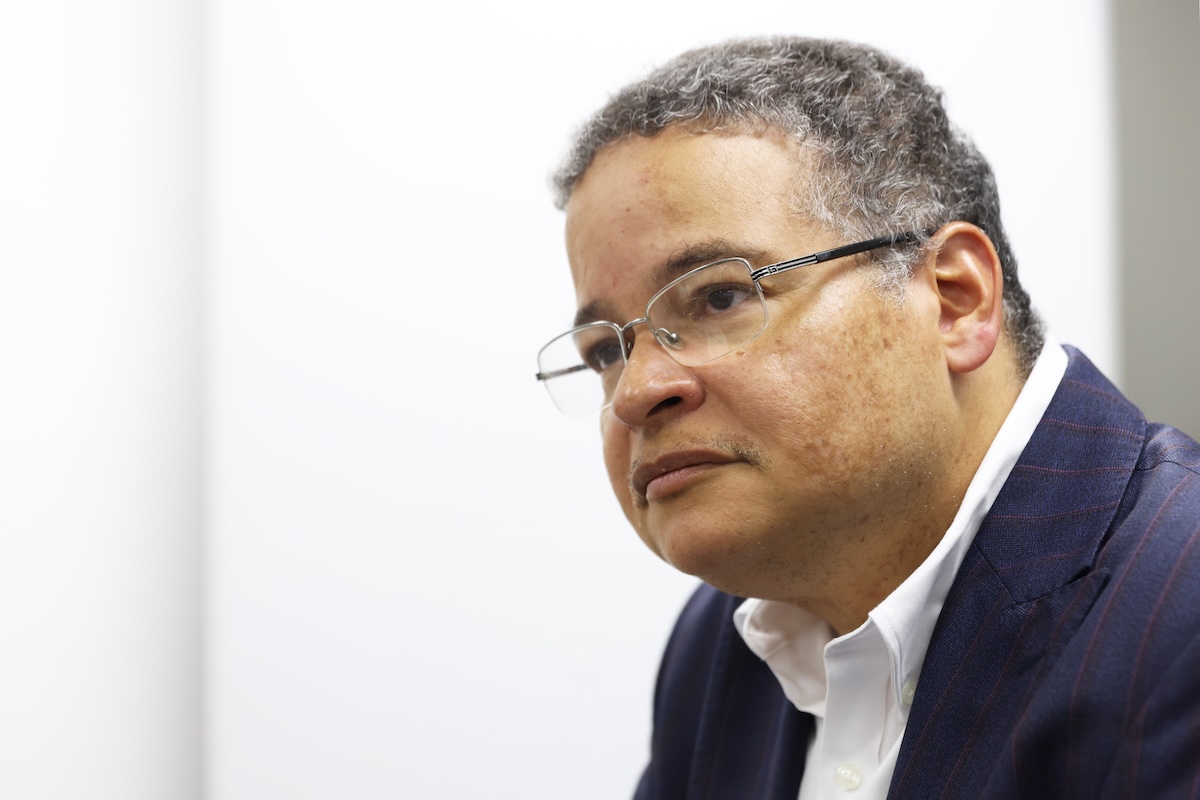
Photo by Brandon Cruz González | Centro de Periodismo Investigativo
When asked about the closure of labor and delivery units in Puerto Rico, Ramos Otero said permission must be requested before a unit is closed.
“I am very reluctant to authorize it [the closure of labor and delivery units], but some have had to be authorized… But there have been several additional closures that I have not authorized,” he acknowledged, citing as an example the labor and delivery unit at Hospital Pavía in Arecibo.
Between 2025 and 2026, the Puerto Rico Senate issued at least three negative reports on legislative measures aimed at investigating the closure of labor and delivery units, facilitating access to cesarean-section statistics and promoting action against obstetric violence.
The three bills were introduced in 2025 by Puerto Rican Independence Party Sen. María de Lourdes Santiago Negrón. Popular Democratic Party Sen. Ada Álvarez Conde served as co-author of the measure addressing obstetric violence, along with PIP Sen. Adrián González Costa, who is also listed on the measure regarding cesarean-section statistics.
Acevedo Cordero, the young woman from Moca, is grateful that her pregnancy and delivery unfolded without complications. She described the feeling of holding her baby in her arms as “the most wonderful experience in life,” while also calling for more nearby services to care for pregnancies and deliveries in Puerto Rico.
“I would love for the next time, if God blesses me with another child, there to be gynecologists closer by, labor and delivery units open closer by, so I don’t have to travel so far,” she said.
In her case, she did not have to leave her baby in the neonatal intensive care unit, or NICU, but she said she has friends who traveled every day from towns in western Puerto Rico to the labor and delivery unit in San Germán to visit and breastfeed their children.
“It would be super convenient to have labor and delivery units closer by,” she said.
Journalists Cristina del Mar Quiles, Génesis López Cruz, Camila Cobo Ortiz, Gabriela Dávila, Marta de Jesús, Mariela Fullana Acosta and Víctor Rodríguez Velázquez contributed to this report.
This translation was generated with the assistance of AI and reviewed by Centro de Periodismo Investigativo’s editorial team to ensure accuracy and clarity.